
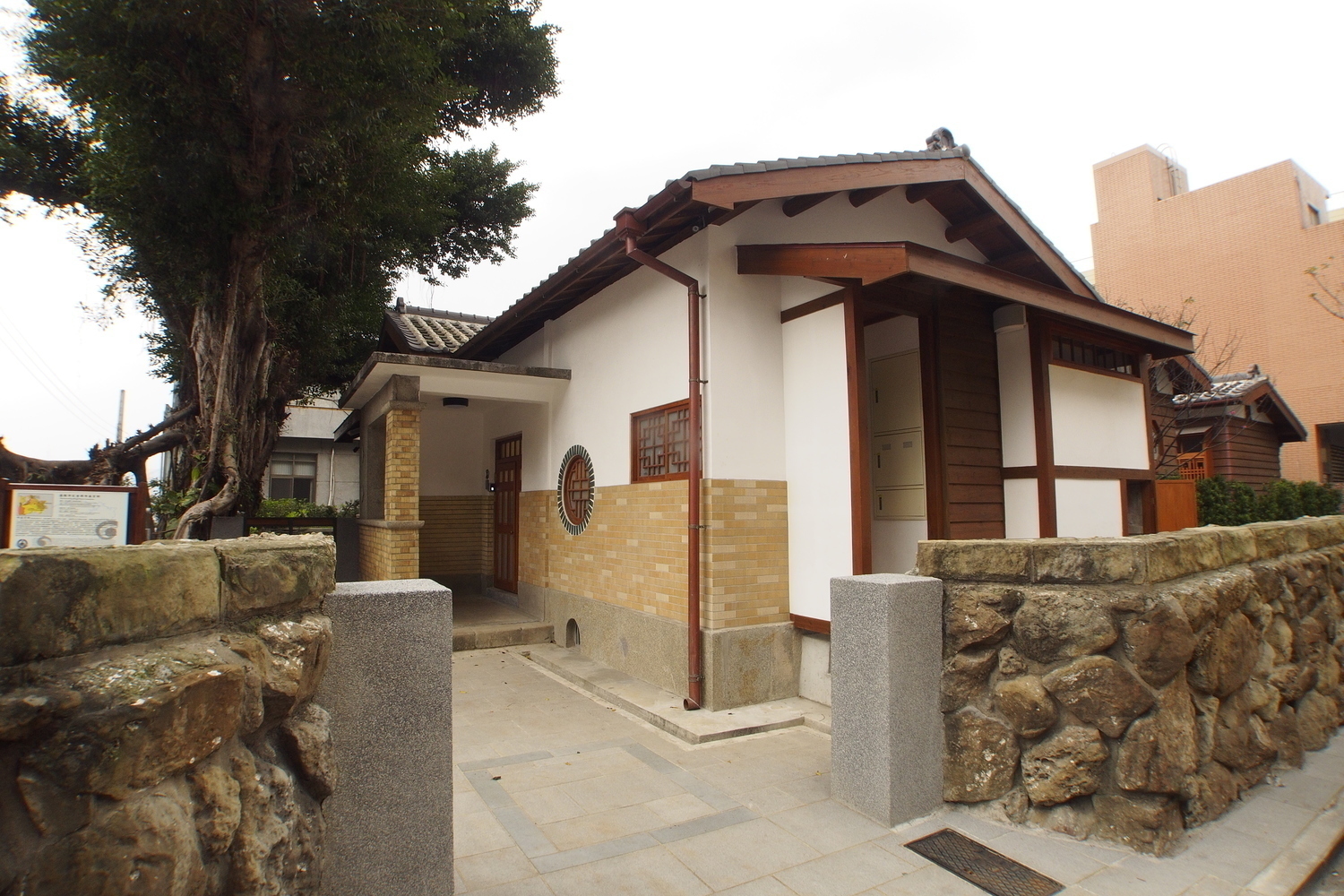
The mayor's official residence was originally the Matsuura Company Residence. It was built around 1932 and was a suburban detached villa with views of Dashawan Beach and Asahigaoka Hill. It served as the base for Matsuura Shinpei to socialize and develop his business. It can be said to have witnessed the residential choices of Keelung's local elites who appreciated nature during the Japanese occupation, as well as their development of political and economic connections.
After World War II, it served as the official residence of Mayors Deng Bocui, Xie Guanyi, and Lin Fanwang, marking the process by which the mayors' families transformed the informal political living space from one where Japanese people knelt to one where Han people sat on high. It can be said that their official activities constitute a page in the local political history of Keelung. Later, it went through a period of separation, becoming a key clue for the study of Keelung's land and housing development history, urban development history, and local political history.
In terms of architectural aesthetics, in addition to inheriting the Japanese aesthetic of shadow in spaces such as between beds and on the sides, the contrasting configuration of the grid-shaped Japanese-style space and the Western-style bedroom, the contrasting difference between the flat roof of the entrance hall and the roof of the central Japanese-style main house, the central corridor-type floor plan, and the use of materials such as pebbles, grooved glazed tiles and crystal glass, all bear witness to the transformation process of the Shuyuan-style building in response to the challenges of modernity.
It also reveals the transformations made to suit the local conditions of Keelung: such as the orientation, side decorations and the addition of glass shoji screens, the installation of ventilation vents, the combination of stilt and roof styles to create a three-sloped, three-sheltered roof for the main house, and the terrace designed to offer panoramic sea views. Given the continued potential of Keelung's location overlooking the harbor and offering stunning views of the mountains and sea, this restoration and revitalization of historical sites serves as a mirror reflecting modern Keelung's return to the embrace of the mountains and sea for sustainable development, possessing forward-looking significance.