
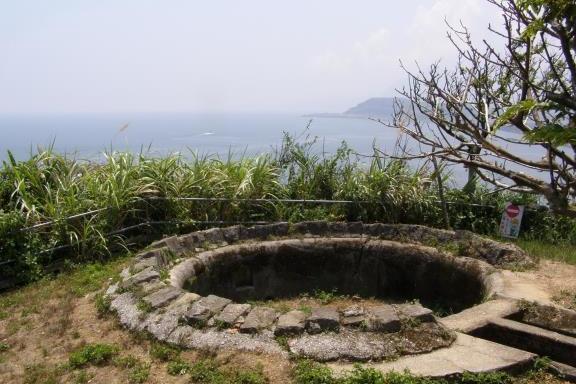
Sheliao, now known as Heping Island, was originally an indigenous settlement of the Keelung community. Due to its strategic importance, it served as a crucial military stronghold for defending Keelung Harbor from the 17th century onwards. According to research, the Spanish built a fort there as early as 1626, which was destroyed during the early Qing Dynasty. It was rebuilt by Liu Mingchuan before the Sino-French War, but was immediately destroyed again. In 1886, Liu Mingchuan rebuilt the Sheliao fort once more, which was later remodeled by the Japanese, dividing it into east and west forts. Due to its long period of neglect and lack of protection, the Sheliao fort suffered significant damage. In recent years, active planning for its preservation has been implemented, and it has become a newly emerging tourist attraction showcasing the fort's historical relics.
Although the overall layout of Sheliao East Fort is similar to other forts in Keelung, due to its later construction, some distinctive architectural details can still be found. Overall, it maintains the unique military style and spatial characteristics of the Japanese occupation period.
Sheliao Island was first fortified in 1626. The current location of the Sheliao West Fort is likely the site of the Spanish-built Fort Kemo, which was later occupied by the Dutch in 1642 and renamed Victoria Fort. It was abandoned during the early Qing Dynasty period. Liu Mingchuan rebuilt a fort on the site before the Sino-French War, but the war broke out before the fort was completed. Liu Mingchuan rebuilt the Sheliao Fort in 1886. After Japan colonized Taiwan, the Sheliao Fort was rebuilt in 1907 and completed in 1924, consisting of east and west forts.
Due to a lack of excavation and attention, many facilities at Sheliao East Fort have been damaged. Currently, only the water reservoir, barracks, troop station, command post, machine gun bunker, observation post, and ammunition depot remain, all constructed of stone. The fort's layout employs a hillside-hugging design, utilizing the valley's hollow to house the barracks, providing excellent concealment. The gun emplacements are located on the hilltop, making the fort difficult to spot from the open sea. Sheliao East Fort served as a military stronghold in the Keelung area from the late Qing Dynasty to the Japanese occupation period, and thus possesses significant preservation value.